20 March 2010

What Good Teachers Say About Teaching

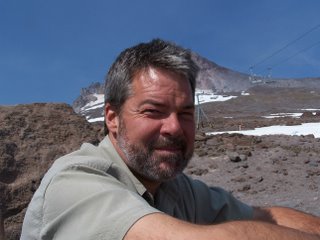
James L. Patton

Distinguished Teaching Award: 1991

Integrative Biology

Statement written: 1991


The undergraduate and graduate students who attend the University of California at Berkeley are among the very best that this country (or any other) has to offer. The challenge to the teacher, therefore, is the dual one of (1) capitalizing on that intelligence so that individuals can learn to think critically and openly and (2) providing them with sufficient factual information so that they can discuss ideas and concepts creatively. Bright people are not as easily satisfied with the status quo and, because learning comes relatively easily to them, they need to be stimulated to learn to their capacities.

The single word that underscores my teaching philosophy is commitment—commitment to each student as an individual, commitment to provide the most invigorating educational environment possible, and to recognize the variance in their individual capabilities and interests. I give formal lecture-laboratory courses, but I teach through personal contact, by interacting with all students as the individuals they are, and by communicating with them at a level and intensity that seem optimal for their development. I design my courses, as well as my participation in them, to maximize one-on-one or small-group interactions. But I am not simply a classroom teacher; I maintain a very active research program and I supervise Ph.D. and postdoctoral students and undergraduates working on honors theses. I consider research and teaching closely intertwined in a most positive way.

Knowledge in biology is accrued at a very rapid rate, and biology as a subject is accretionary. The art in teaching biology is to excite students with that which is current, while giving them the temporal depth to appreciate how and why the field is at a particular point today. It is not easy to do this when the subject matter increases at an exponential rate, but the time devoted to lectures, for example, remains static. I try to achieve this balance by combining lecture materials with assigned and suggested readings from the primary literature, including those that provide the historical basis for a discovery, a controversy, or a viewpoint coupled with those that provide the most up-to-date reviews. I make notes following many lectures about the perceived success (or failure) in my delivery of particular topics, and change the contents, the approach, or both when discussing the same topic in the subsequent year.

Because I interact closely with all students throughout the semester, teaching takes on the informality of continual discussions rather than being restricted by the boundaries of the lecture classroom. My goal is to make all students completely at ease in my presence, so that they are unafraid to open their minds or to ask the most fundamental questions, and so to push themselves to their own limits and beyond. My commitment to each course is total, and all my interactions with individual students are extremely rewarding. Indeed, it is because of the possibility of such interactions that I have remained a faculty member at Berkeley.


19 March 2010

Africa’s Gift to Silicon Valley: How to Track a Crisis

Africa’s Gift to Silicon Valley: How to Track a Crisis

Photograph by Ruth Fremson/The New York Times

Could wiki technology find Osama bin Laden?

Ushahidi.com

FOLLOW THE DOTS Reports from residents were used in Haiti to pinpoint locations of earthquake victims.

Snowmageddoncleanup.com

In Washington, D.C., Ushahidi partnered with the Washington Post to warn of snow-covered roads.

Imagine if any Pakistani could send an anonymous text message to the authorities suggesting where to look. Each location could be plotted on a map. The dots would be scattered widely, perhaps, with promising leads indistinguishable from rubbish. But on a given day, a surge of dots might point to the same village, in what could not be coincidence. Troops could be ordered in.

This kind of everyone-as-informant mapping is shaking up the world, bringing the Wikipedia revolution to the work of humanitarians and soldiers who parachute into places with little good information. And an important force behind this upheaval is a small Kenyan-born organization calledUshahidi, which has become a hero of the Haitian and Chilean earthquakes and which may have something larger to tell us about the future of humanitarianism, innovation and the nature of what we label as truth.

After Kenya’s disputed election in 2007, violence erupted. A prominent Kenyan lawyer and blogger, Ory Okolloh, who was based in South Africa but had gone back to Kenya to vote and observe the election, received threats about her work and returned to South Africa. She posted online the idea of an Internet mapping tool to allow people anonymously to report violence and other misdeeds. Technology whizzes saw her post and built the Ushahidi Web platform over a long weekend.

The site collected user-generated cellphone reports of riots, stranded refugees, rapes and deaths and plotted them on a map, using the locations given by informants. It collected more testimony — which is what ushahidi means in Swahili — with greater rapidity than any reporter or election monitor.

When the Haitian earthquake struck, Ushahidi went again into action. An emergency texting number was advertised via radio. Ushahidi received thousands of messages reporting trapped victims. They were translated by a diffuse army of Haitian-Americans in the United States and plotted on a “crisis map.” From a situation room at the Fletcher School of Law and Diplomacy in Medford, outside Boston, Ushahidi volunteers instant-messaged with the United States Coast Guard in Haiti, telling them where to search. When the Chilean earthquake struck, Ushahidi deployed again.

A lot of things could go wrong with this model. People could lie, get the address wrong, exaggerate their situation. But as data collects, crisis maps can reveal underlying patterns of reality: How many miles inland did the hurricane kill? Are the rapes broadly dispersed or concentrated near military barracks?

Ushahidi suggests a new paradigm in humanitarian work. The old paradigm was one-to-many: foreign journalists and aid workers jet in, report on a calamity and dispense aid with whatever data they have. The new paradigm is many-to-many-to-many: victims supply on-the-ground data; a self-organizing mob of global volunteers translates text messages and helps to orchestrate relief; journalists and aid workers use the data to target the response.

Ushahidi also represents a new frontier of innovation. Silicon Valley has been the reigning paradigm of innovation, with its universities, financiers, mentors, immigrants and robust patents. Ushahidi comes from another world, in which entrepreneurship is born of hardship and innovators focus on doing more with less, rather than on selling you new and improved stuff.

Because Ushahidi originated in crisis, no one tried to patent and monopolize it. Because Kenya is poor, with computers out of reach for many, Ushahidi made its system work on cellphones. Because Ushahidi had no venture-capital backing, it used open-source software and was thus free to let others remix its tool for new projects.

Ushahidi remixes have been used in India to monitor elections; in Africa to report medicine shortages; in the Middle East to collect reports of wartime violence; and in Washington, D.C., where The Washington Post partnered to build a site to map road blockages and the location of available snowplows and blowers.

Think about that. The capital of the sole superpower is deluged with snow, and to whom does its local newspaper turn to help dig out? Kenya.

With every new application, Ushahidi is quietly transforming the notion of bearing witness in tragedy. For a very long time, this was done first by journalists in real time, next by victim/writers like Anne Frank and, finally, by historians. But in this instantaneous age, this kind of testimony confronts a more immediate kind: one of aggregate, average, good-enough truths.

“We’re moving beyond the idea that information is completely true or completely false,” said Patrick Meier, a student at Fletcher who directs Ushahidi’s crisis-mapping operation.

So what will it mean to bear witness in the future? They say that history is written by the victors. But now, before the victors win, there is a chance to scream out with a text message that will not vanish. What would we know about what passed between Turks and Armenians, between Germans and Jews, if every one of them had had the chance, before the darkness, to declare for all time: “I was here, and this is what happened to me”?

15 March 2010

A Different Kind of Aid: Hand Out Money

A Different Kind of Aid: Hand Out Money

Published: March 15, 2010

In central Vietnam, the aid organization Oxfam Great Britain did something unusual in the world of international development: it gave poor people money.

From mid-2006, Oxfam GB handed one-time cash grants to 550 poor households in An Loc commune, a rice-growing community in Ha Tinh Province on the central coast of Vietnam.

The money came with no conditions other than that it couldn’t be used for alcohol, drugs or gambling, and that the family had to agree to report over a three-year period how it was spent. Some payments were as much as $375, more than half of the average annual income of a poor household in the village.

The program is a variation of the increasingly popular “conditional cash transfer” programs, in which development organizations provide cash payments conditional upon work, or taking part in a socially beneficial activity such as attending a school or health clinic, or agreeing to spend the money on a specific priority, such as housing or starting a business. By contrast, “unconditional cash transfers” — what Oxfam is trying — are cash payments with no such provisos.

What happened when poor people received nearly half a year’s income with no strings attached?

Oxfam’s reviews of the program found that families had used the money to improve their household food security and overall income, with many investing in cows that generate long-term revenue for the family.

School dropout rates decreased, and gender equity in the village improved, with women sharing control of the money. Most significantly, initial reviews showed the poverty rate decreased by nearly a quarter in two years, from 65.1 percent in 2006 to 40.2 percent in 2008 . Village leaders attributed the decrease directly to the cash handouts.

“We felt that poor people clearly have the right to decide how the money is spent,” said Steve Price-Thomas, the Vietnam country director of Oxfam Great Britain. “What better than to put money in their hands and let them decide what to do with it?”

The project challenges traditional views about development assistance. As an Oxfam study on the program noted: “The standard approach of development projects is for professional experts to lead in identifying suitable livelihoods, rather than empowering individual households to make diverse choices.”

The program also cuts down on administrative and consultancy costs and directly challenges “beliefs in the development community about poor people’s ability to make wise and rational use of cash,” the report says.

Price-Thomas noted that despite the unusual method of distributing the assistance, the program is actually a microcosm of what is happening globally in development assistance.

“This is budget support at the household level,” he said. “The same arguments apply for household budget support as national budget support, which is common.”

Critics of such direct cash payments, however, say they don’t affect the structural causes of poverty, such as deficiencies in education and infrastructure necessary to generate job-creating investments.

Others say that giving away cash is nothing new — it is called “welfare” in the United States and Europe and should be introduced cautiously into developing countries so as not to breed long-term dependency. The most accepted path out of poverty, these critics argue, is work, and giving out free money is a questionable way to generate employment and build a sustainable economy.

Price-Thomas rejects the notion that such cash payments to poor families can be compared to welfare.

“Welfare payments in the U.S. and Europe are long-term, small payments,” he said. “This was a large, one-off transfer, which households knew was coming for months in advance so they could plan for it and avoid the windfall effect.”

He also notes the Oxfam program is not meant to replace existing development initiatives. “In the particular case of this program, the lives of a significant number of households have changed for the better and that change is still apparent three years later,” he says. “That doesn’t mean we should stop worrying about education services and women’s political participation and the many other aspects of development assistance. This is a useful tool, but not the only one.”

It’s unlikely that the billions of dollars in development aid that is spent annually will ever be turned over to the poor without conditions, but the Oxfam program deserves a closer look by traditional development organizations.

Floyd Whaley is a journalist based in the Philippines.

15 February 2010

Summer Corn and Pepper Chowder

The Washington Post, August 20, 2008

  • Course: Soup

Summary:

Tomatoes and squash aren't the only vegetables overflowing bins and baskets at the market in late August: Peppers come in with a vengeance. Green bell peppers, sweet bell peppers, frying peppers, purple peppers, hot peppers; you name it and they're probably being harvested right now and for many weeks to come. In this recipe, sweet peppers are combined with fresh corn to make a chowder so full of vegetables that it's more like a light stew. With all those peppers, it's not necessary to boost the flavor with the traditional bacon or salt pork.
This soup is best the day it is made. Vegetarians can substitute water or vegetable broth for the chicken broth.

8 servings

Ingredients:

  • 4 ears corn, husks removed
  • 4 cups low-sodium chicken broth
  • 1 cup water, or more as needed
  • 2 tablespoons mild olive oil
  • 1 pound assorted peppers, such as green, red and purple bell peppers and frying peppers, seeded and cut into 1/4- to 1/2-inch dice (about 3 cups diced)
  • 1 medium onion, cut into 1/4- to 1/2-inch dice (about 1 cup)
  • 3/4 cup diced celery (1/4- to 1/2-inch dice, from about 2 stalks)
  • Salt
  • Freshly ground black pepper
  • 1 pound all-purpose, Yukon Gold or yellow potatoes, peeled and cut into 1/2-inch cubes
  • 2 tablespoons flour
  • 3/4 cup sour cream, for garnish

Directions:

Holding a cob of corn vertically on a cutting board, cut down the side with a small knife, removing the kernels. Repeat until the kernels are removed from each cob. Set the kernels aside. Break each shaved cob in half and place in a medium saucepan with the chicken broth and water. Cook over medium-high heat until the broth comes to a boil, then adjust the heat so the broth maintains a very slow bubbling. Let the cobs cook for about 15 minutes.

Meanwhile, place a soup pot large enough to hold all of the ingredients over medium heat and add the olive oil. When the oil is hot, add the diced peppers, onions, celery, and salt and pepper to taste. Cook the vegetables until softened but not browned, about 10 to 12 minutes. Add the flour to the vegetables and cook, stirring to dissolve and incorporate the flour, for 1 to 2 minutes.

Remove the cobs from the broth and discard. Add the broth to the vegetable mixture along with the diced potatoes and corn kernels. Add water as needed to just cover the vegetables. Taste and add salt and pepper if needed. Bring to a boil and adjust the heat so the liquid continues to bubble slowly. Cook until the potatoes and corn are tender, 15 to 20 minutes.

Remove the soup from the heat and let sit for 15 minutes. Ladle into serving bowls and top each with a generous tablespoon of sour cream

Recipe Source:

From Stephanie Witt Sedgwick.

12 August 2009

Backyard in Berkeley - With Chickens

Just a few snaps - actually a test of linking together a bunch of devices in preparation for some travel that I hadn't bothered to figure out how to do yet. It is all very convenient and well integrated.


Posted by Picasa

15 April 2009

Migration

As a long time bander I will chip in on this. For North American birds, I am most familiar with neotropical migrants on the west coast having worked and worked the data at several MAPS (MONITORING AVIAN PRODUCTIVITY AND SURVIVORSHIP PROGRAM) stations in the Sierra Nevada in the 90's. The original intent of the program was to figure out individual survivorship of migratory birds because no really good data existed for individuals and there was (and there remains) great concern about declining populations of migratory bird habitat on the winter (non-breeding) range. Of course, that is the case (as we sip our Central American coffee), but other patterns emerged over time, some of it well documented by banding records and some speculative and intuitive after nearly 20 years of collecting data (the program began in 1989). In short, lots of different things happen.

One relatively common thing that happens is that birds that winter in temperate places like the Willamette Valley, the Sierra foothills, or Baja California often breed very far north but are replaced by birds that winter further south but arrive as the northern breeders depart. I watched this with Pacific-slope Flycatchers working on the Channel Islands but only in retrospect - the wintering flycatchers would "disapper" for a few days and then suddenly you would start hearing them again, not the same birds but the cousins in from Costa Rica ... I suspect that breeding Varied Thrushes in Oregon are not the birds we see in the Coast Range in January, after all their old name was "Alaska Robin", but instead birds that spent December and January in Big Sur. You also see this statistically as recapture rates change - as the breeding season progresses recaptures of birds banded in prior seasons increases. Some birds are altitudinal migrants for breeding, often following the snow line upslope on exploratory forays but there is also the phenomenon of birds breeding very early and young dispersing upslope from their hatching area and breeding again (as young of the year) at a higher altitude. Orange-crowned Warblers do this in the central Sierra and suspect Juncos often do the same. Another interesting phenomenon that I have observed from banding on wintering ranges is altitudinal segregation of populations on the wintering range. You see birds like Hermit Thrushes with distinctive subspecies or populations that can be identified in the hand segregating by altitude - high latitude breeders at higher altitudes on the winter range and lower latitude breeders at lower altitudes.

All this is made possible by the somewhat arcane (and often more art than science) of ageing birds by feather wear, subtle plummage variations, skull suture patterns, breeding condition (brood patch age, cloacal protuberance) and of course simple recapture data (see Identification Guide to North American Birds Part I by Peter Pyle). At one MAPS location near Yuba Pass in California there was a Yellow Warbler that was captured for 9 consecutive seasons in the same willow with the first recapture always within a few days of the prior years' capture. He was certainly not the champion. I moved to Southern Africa and did similar work there for many years (coming back to the States a few years ago and landing in Oregon) and the fascinating thing is that paleotropical migrants are much longer lived than our neotropical migrants - a nine year old passerine banded in temperate South Africa is relatively ordinary and there is no reasonable explanation as to why ... yet. Any prospective grad students out there looking for a project?

Best regards,

Mike Gellerman

From: David Fix & Jude Power <foglark@att.net>
To: obol@oregonbirdwatch.org
Date: Tue, 14 Apr 2009 12:28:47 -0700 (PDT)
Subject: [obol] spring departure of wintering birds
In recent OBOL posts, there has been discussion about where wintering Dark-eyed Juncos, Varied Thrushes, and similar species usually seen only in winter in the lowlands at many locations go when nesting season arrives.

Some have suggested that juncos, to name one example, move upslope into the mountains to nest. While this is likely the case for many, it seems to me that it is a bit short-sighted. To inject a dissenting point of view, I suspect that a huge number of wintering juncos (I would imagine many tens of thousands) don't move upslope, but instead leave Oregon entirely, and may fly hundreds of miles, into Washington and way up into British Columbia. Conversely, it may be that many of the juncos that breed in the foothills and mountains of w. Oregon don't even winter in the state, but do so farther south. Perhaps Dennis Vroman or some other bander might chip in on this.

The same could be true for Varied Thrush, whose breeding populations north of Oregon (based on range, and amount of habitat) are likely far greater than those within the state.

Similarly, when we see birds such as Orange-crowned and Wilson's Warblers and Pacific-slope Flycatchers "arrive," it seems likely--if based merely on the immense populations of those species, and their vast ranges--that nearly ALL of the individuals we encounter are not going to breed locally, and perhaps most not even in Oregon; they could well be headed toward the more northerly part of their range. Many of the Orange-crowns seen in an April morning on Skinner Butte in Eugene could well be in Chehalis, Bremerton, or coastal B.C. a few days later.

It's easy to think of these as "our" birds, about to settle in for the summer, but a look at the range maps for many will suggest that maybe that's not the case. The truth is not available, but I thought I'd suggest an alternate scenario.

David Fix
Arcata, California

14 April 2009

Planted onions and potatoes today, quatre saison lettuce, spinach and mesculun look good. Garlic didn't come in as well as usual so maybe we can plant some more. The artichoke is ready to go and we think there is a zuchini coming up.
Posted by Picasa

07 April 2009

I was putting the canoe out in the backyard and moving around some old wood when I found this creature. We have never seen so much as a newt around Bethany Pond, but when we looked him up he is the Western Long-toed Salamander (Abystoma macrodactylum) and happens to be the second most common
Posted by Picasa

Lost at Scrable Again

This makes two in a row. It all seemed to be going so well and she was even sleepy. Stay tuned for a rematch
Posted by Picasa

24 March 2009

Golden Eagle at "S" River


Golden Eagle at "S" River
Ridgefield National Wildlife Refuge
23 March 2009


Quiz: Which photo is not an eagle and taken in my backyard on the same day?


22 March 2009

The best sign of Spring arriving (today) is seeing Rufous Hummingbirds arrive right on schedule. A very hungry male has been refueling and even so bold as to chase off a male Anna's Hummingbird that has been here all winter.
Posted by Picasa

16 March 2009

Angola War Books


Format:

Book

Author:

Maier, Karl, 1957-

Title:

Angola : promises and lies / Karl Maier.

Publisher, Date:

London : Serif , 2007.

Description:

224 p. : map ; 22 cm.

Subject:

Angola -- History -- Civil War, 1975-2002.


Angola -- History -- 2002-


Angola -- Social conditions.

Notes:

Includes bibliographical references (p. 215-216) and index.

ISBN:

1897959524 (pbk.)


9781897959527 (pbk.)


Publishers Weekly Reviews

Combining finely detailed
reportage with anecdotal snapshots of the horrors of war, Maier, a
correspondent for The Independent and the Washington Post who began
reporting on Angola in 1986, offers an explanation of the Angolan civil
war for the rest of us. His engrossing chronological account lays out
the nearly two decades of conflict that have ripped apart the southern
African nation. An inability to resolve differences rooted in race,
political ideology and tribal ethnicity has set contemporary Angola on
a highway to hell instead of the road to prosperity its vast reserves
of natural resources promised. Maier notes with some irony that
American oil companies have continued their drilling operations
throughout the war. He also intelligently positions the conflict's
historical import as one of the last battlegrounds for the combatants
in the Cold War. Despite a glossary defining the plethora of acronyms
that riddle the pages, some readers may have a hard time following
which faction is fighting for what side during, first, Angola's war for
independence from its colonial Portuguese rulers and, second, the
lengthy civil war that continues today. Maier tells his story in the
present tense, which makes the book read like dispatches from today's
paper. The writer's sharp eye for detail catches a swarm of hungry
Angolans falling upon a bag of maize that foreign aid workers have
dropped onto an airport tarmac. The powder sifts through their
emaciated fingers as they try to stash it in strips of fabric tied
around their concave chests. More of this kind of personal observation
and reflection would have added to the book's compelling narrative.
(Sept.) Copyright 1996 Cahners Business Information.


Format:

Book

Author:

Devlin, Larry.

Title:

Chief of station, Congo : a memoir of 1960-67 / Larry Devlin.

Edition:

1st ed.

Publisher, Date:

New York : PublicAffairs, c2007.

Description:

xi, 288 p., [8] p. of plates : ill., map ; 25 cm.

Subject:

Devlin, Larry.


Diplomats -- United States -- Biography.


Intelligence officers -- United States -- Biography.


Espionage, American -- Congo (Democratic Republic) -- History -- 20th century.


Congo (Democratic Republic) -- History -- Civil War, 1960-1965 -- Personal narratives, American.


United States -- Foreign relations -- Congo (Democratic Republic)


Congo (Democratic Republic) -- Foreign relations -- United States.

Notes:

Includes bibliographical references and index.

ISBN:

9781586484057 (alk. paper)


1586484052 (alk. paper)

LCCN:

2006028475

Booklist Reviews

When Belgium ceded independence to the
Congo in 1960, one of the cold war's most acute crises erupted. The
French-speaking Devlin was there as the CIA's man in Leopoldville
(today, Kinshasa) with a charge to defeat a Soviet and Chinese
Communist surge into the country. This memoir shows the author in best
light as a station chief with personal courage and cultural astuteness,
a quick thinker in sticky situations, many potentially lethal. The
hair-raising incidents, often at roadblocks, once with burglars in his
house, so common in Devlin's narrative will instill those interested in
operational intelligence careers with the 24/7 risks of a posting in
the field, while his involvement with political developments in
chaotic, post-independence Congo contributes primary testimony to the
history of the period. Devlin acknowledges, for example, receiving an
order to assassinate leftist premier Patrice Lumumba, but says he
opposed it as immoral and did not carry it out. Including his personal
impressions of Mobutu, the eventual victor in Congo's early 1960s
turmoil, Devlin's retrospective will rivet the espionage set.
((Reviewed January 1 & 15, 2007)) Copyright 2007 Booklist Reviews.

Kirkus Reviews

A
spy comes in from the dripping heat.Devlin, long retired from The
Company, recounts a busy career fending off Soviet ambitions in Africa
as a CIA agent and then station chief, a spook’s version of ambassador.
In most parts of the world, he writes, that rivalry was an aptly named
cold war, whereas in Congo, where he was stationed, it was decidedly a
hot one. Newly independent from a once-rapacious Belgium, for whose
colonial administrators Devlin has little use, Congo faced its first
major crisis when the new leader, Patrice Lumumba, “promised all
government employees a pay raise, all, that is, except the army.” In a
country where the army has all the guns, that is always a dicey
proposition, and Lumumba found himself facing civil war, urged along by
the American government, which wanted to see him gone; one memo of Aug.
26, 1960, puts its baldly: “if Lumumba continues to hold high office,
the inevitable result will at best be chaos and at worst pave the way
to a Communist takeover of the Congo. . . . Consequently, we concluded
that his removal must be an urgent and prime objective and that under
existing conditions this should be a high priority of our covert
action.” By his account conscience-stricken, Devlin resisted doing the
wet work. By other accounts, which Devlin cites, he was roundly
implicated in the eventual ouster and assassination of Lumumba. Given
what seems to be an air of late-in-life candor, it seems reasonable to
trust the author, but you can’t ever know for sure. In whatever case,
Lumumba’s absence opened the door to long-reigning dictator Mobutu,
whom Devlin considers a pretty good guy overall; America’s interests
were thus well served, thanks as much to Soviet ineptitude as to
anything the CIA did.An unusually open look at CIA operations in the
Eisenhower-Kennedy era, adding an interesting, perhaps controversial,
footnote to the still-much-debated death of Lumumba. Copyright Kirkus
2006 Kirkus/BPI Communications. All rights reserved.

Publishers Weekly Reviews

In
this vivid, authoritative account of being CIA station chief in Congo
during the height of the Cold War, Devlin brings to life a harrowing
tale of postcolonial political intrigue, covert violence and the
day-to-day reality of being a key player in a global chess match
between superpowers. Posted to Congo in 1960, Devlin quickly found
himself at the swirling center of conflict— the Belgian colonial
rulers had pulled out, the local strongmen had begun what would be a
decades-long struggle for power and the Soviet Union was sending agents
to influence events. Arriving on the scene with his wife and young
daughter in tow, Devlin finds "central authority had broken down; there
was no one in control who could prevent random acts of barbarity." As
the country begins to fall apart and Prime Minister Patrice Lumumba
starts flirting with the Soviets, orders come from Washington for "his
removal." Within weeks Lumumba is not only out of power but dead. While
the rest of the book is full of exciting cloak-and-dagger derring-do
and scrapes with death, it is this incident that haunts Devlin. He
devotes the last chapter of the book to a point-by-point refutation of
his or the agency's involvement in Lumumba's death. That alleged
assassination is often used to illustrate the hypocrisy in U.S. foreign
policy. Devlin's straightforward, plainly written approach to the task
lends credence to his assertion of innocence. (Mar.)

[Page 42]. Copyright 2006 Reed Business Information.


The United States and South Africa, 1968-1985: Constructive Engagement and Its Critics (Hardcover)


by Christopher Coker (Author)


  • Hardcover: 360 pages
  • Publisher: Duke Univ Pr (Tx) (June 1986)
  • Language: English
  • ISBN-10: 0822306654
  • ISBN-13: 978-0822306658

Constructive Engagement?: Chester Crocker & American Policy in South Africa, Namibia & Angola (Paperback)


by J. E. Davies (Author)

  • Paperback: 256 pages
  • Publisher: Ohio University Press; 1 edition (December 18, 2007)
  • Language: English
  • ISBN-10: 0821417827
  • ISBN-13: 978-0821417829


Product Description

The
notion of engagement represents an indispensible tool in a foreign
policy practitioner’s armory. The idea of constructive engagement is
forwarded by governments as a method whereby pressure can be brought to
bear on countries to improve their record on human rights, while
diplomatic and economic contracts can be maintained. But does this
approach succeed? To answer this question this book offers a critical
evaluation of one of the best-known examples of constructive
engagement—the Reagan administration’s policy toward South Africa.

Chester Crocker was appointed as Reagan’s assistant secretary of state
for African affairs in 1981. Crocker maintained that unvarying hostile
rhetoric leveled at the apartheid regime in South Africa only served to
increase Pretoria’s mistrust and dislike of Washington and hardened
Pretoria’s intransigence.
Crocker asserted that an open dialogue,
together with a reduction of punitive measures, such as export
restrictions, would gain the confidence of Pretoria, enabling
Washington to influence South Africa toward a gradual change away from
apartheid.
This book aims to determine how successful Crocker’s
constructive engagement policy was in South Africa and the neighboring
states of Namibia and Angola. In this timely and brilliant study,
Davies examines the implications for current applications of
constructive engagement as a tool of foreign policy.


About the Author

J. E. Davies taught international relations at the University of Wales, Swansea, and is now a freelance writer living in Wales.


Ovambo Politics in the Twentieth Century (Paperback)


by Allan D. Cooper (Author)

  • Paperback: 362 pages
  • Publisher: University Press of America (December 2001)
  • Language: English
  • ISBN-10: 0761821104
  • ISBN-13: 978-0761821106

The Global Cold War: Third World Interventions and the Making of Our Times (Paperback)


by Odd Arne Westad (Author)


  • Paperback: 498 pages
  • Publisher: Cambridge University Press (February 19, 2007)
  • Language: English
  • ISBN-10: 052170314X
  • ISBN-13: 978-0521703147

Review
'This is a genuinely 'international' history ... few
genuine research monographs are so wide ranging chronologically and
geographically, while also trying to absorb insights from sociology and
social anthropology ... taken as a whole no historian has dealt with
the links between the Cold War so fully, so broadly and so thoughtfully
as Westad in this new account ... a truly seminal work, whose findings
will exercise those researching the Cold War for many years.' Reviews
in History 'The Global Cold War is a powerful account of the way in
which the third world moved to the center of international politics in
the closing decades of the 20th century. Drawing on a stunning
multiplicity of archival material, Odd Arne Westad integrates
perspectives and disciplines which have, until now, remained separate:
US and Soviet ideologies, their politics and the interventions that
flowed from both; insurrection, rebellion, revolution and the power of
competing models of development, systems of support or subversion
(sometimes synonymous) that in part determined their outcome. Westad
writes with the combination of clarity, wit and passion that have
always characterized his work. This time the canvas is large enough to
do full justice to his scholarship and his humanity.' Marilyn B. Young,
New York University 'Odd Arne Westad's new book is an extremely
important contribution to the historiography of the Cold War. With
broad erudition, amazing geographical range, and inventive research in
archives around the globe, Westad tells the tragic story of the United
States and Soviet Union's involvement in what became the 'Third World'.
The newly emerging nations of the 'South' - of Africa, Asia, and Latin
America - barely emerged from their humiliating subservience to
European colonialism before being dragged by Cold War rivalries into
ideologically-inspired upheavals that ended up bankrupting their
countries and devastating their peoples. Westad's study enables his
readers to integrate the Third World into the history of the Cold War
and confronts them with the meaning of intervention in the past for the
international system today.' Norman M. Naimark, Stanford University 'In
a reinterpretation of the Cold War that is as thorough as it is
important, Westad places Soviet and American interventions in the Third
World at the center of their struggle. Driven by ideology and the need
to affirm the rightness of their principles, both superpowers felt
compelled to contest with the other in areas of little intrinsic
importance. The results were almost uniformly failures, and in the
process brought much sorrow and destruction to the Third World. The
picture is not a pretty one, but Westad shows that studying it reveals
much about the Cold War, and about the current world scene.' Robert
Jervis, Columbia University 'Based on prodigious research, this
ambitious and wide-ranging book presents the most important account to
date of the Cold War in the Third World. Westad's study represents
broad-based, international history at its best. He deftly weaves
together the tale of world politics writ large with stories about
variegated processes of revolution and social change across the Third
World. This should prove an indispensable work for anyone interested in
the history of the twentieth-century.' Robert J. McMahon, University of
Florida 'For the serious student of our times Odd Arne Westad's The
Global Cold War could provide a serious weapon for their scholastic
arsenal.' Open History: The Journal of the Open University History
Society '... Westad's work combines sophisticated analysis, insight
into the motivations and behaviours of non-Western actors, historical
perspective, fair-mindedness and a sympathy for the victims on all
sides. Westad's pioneering work in Soviet archives means that his book
illuminates better than any other work I have read in English the
thinking and motivations of the Soviet leadership and its advisers when
it came to the Third World.' London Review of Books '... Westad
presents a finely crafted and immaculately researched study that
presents some of the findings from the archives of the former Soviet
Union and its communist allies alongside the more familiar American and
western sources.' International Affairs 'There are already a number of
books on the Cold War, and more are likely as more information becomes
available. This work will remain important, however, for shifting the
focus away from Europe and North Korea, to the wider world in which the
superpower struggle took place. It is well written and draws on a wide
range of materials. Many will not agree with all the arguments, but it
is a major contribution to our understanding of how the world became as
it is.' Asian Affairs 'Westad's brilliant, bitter account, based on
prodigious research, is an indictment of the superpowers. They treated
the Third World as their playground and left it devastated. ... The
authors provide new insights into the Berlin crises of 1958-63.' Martin
McCauley


Review
"Based on prodigious research, this
ambitious and wide-ranging book presents the most important account to
date of the Cold War in the Third World. Westad's study represents
broad-based, international history at its best. He deftly weaves
together the tale of world politics writ large with stories about
variegated processes of revolution and social change across the Third
World. This should prove an indispensable work for anyone interested in
the history of the twentieth-century."
-Robert J. McMahon, University of Florida

"The
Global Cold War is a powerful account of the way in which the third
world moved to the center of international politics in the closing
decades of the 20th century. Drawing on a stunning multiplicity of
archival material, Odd Arne Westad integrates perspectives and
disciplines which have, until now, remained separate: U.S. and Soviet
ideologies, their politics and the interventions that flowed from both;
insurrection, rebellion, revolution and the power of competing models
of development, systems of support or subversion (sometimes synonymous)
that in part determined their outcome. Westad writes with the
combination of clarity, wit and passion that have always characterized
his work. This time the canvas is large enough to do full justice to
his scholarship and his humanity."
-Marilyn B. Young, New York University

"Odd
Arne Westad's new book is an extremely important contribution to the
historiography of the Cold War. With broad erudition, amazing
geographical range, and inventive research in archives around the
globe, Westad tells the tragic story of the United States and Soviet
Union's involvement in what became called the 'Third World.' The newly
emerging nations of the 'South' - of Africa, Asia, and Latin America -
barely emerged from their humiliating subservience to European
colonialism before being dragged by Cold War rivalries into
ideologically-inspired upheavals that ended up bankrupting their
countries and devastating their peoples. Westad's study enables his
readers to integrate the Third World into the history of the Cold War
and confronts them with the meaning of intervention in the past for the
international system today."
-Norman M. Naimark, Stanford University

"In
a reinterpretation of the Cold War that is as thorough as it is
important, Westad places Soviet and American interventions in the Third
World at the center of their struggle. Driven by ideology and the need
to affirm the rightness of their principles, both superpowers felt
compelled to contest with the other in areas of little intrinsic
importance. The results were almost uniformly failures, and in the
process brought much sorrow and destruction to the Third World. The
picture is not a pretty one, but Westad shows that studying it reveals
much about the Cold War, and about the current world scene."
-Robert Jervis, Columbia University

"Westad's
account is sharply observed and deeply researched...this book is
superb: few scholars could match Westad's mastery of the sources."
-Foreign Affairs, May/June 2006

"The Global Cold War is remarkable for its geographical and historical breath"
-Robert A. Goldberg, University of Utah, Journal of Interdisciplinary History

"This
study is a comprehensive, well-documented, and well-written history of
the Cold War in the Third World. Westad has done a superb job of
explaining how the world of today, both at home and abroad, is largely
a product of the Cold War era. His book belongs on the shelf of every
serious student of recent world history."
-Ronald Powaski, The Historian

"This
particularly impressive and clearly written account of the Cold War is
especially valuable because of its global perspective, and its focus on
the worldwide impact of superpower confrontation...an impressive work
that deserves attention."
-Jeremy Black, University of Exeter, The Journal of Military History


Product Description
The Cold War between the
former Soviet Union and the United States indelibly shaped the world we
live in today--especially international politics, economics, and
military affairs. This volume shows how the globalization of the Cold
War during the 20th century created the foundations for most of today's
key international conflicts, including the "war on terror." Odd Arne
Westad examines the origins and course of Third World revolutions and
the ideologies that drove the U.S. and the U.S.S.R. towards
interventionism. He focuses on how these interventions gave rise to
resentments and resistance that, in the end, helped to topple one and
to seriously challenge the other superpower. In addition, he
demonstrates how these worldwide interventions determined the
international and domestic framework within which political, social and
cultural changes took place in such countries as China, Indonesia,
Iran, Ethiopia, Angola, Cuba, and Nicaragua. According to Westad, these
changes, plus the ideologies, movements and states that interventionism
stirred up, constitute the real legacy of the Cold War. Odd Arne Westad
is Professor of International History at the London School of Economics
and Political Science. In 2004 he was named head of department and
co-director of the new LSE Cold War Studies Centre. Professor Westad is
the author, or editor, of ten books on contemporary international
history including Decisive Encounters: The Chinese Civil War, 1946-1950
(2003) and, with Jussi Hanhimaki, The Cold War: A History in Documents
and Eyewitness Accounts (2003). In addition, he is a founding editor of
the journal Cold War History.


Book Description
This is a compelling and
controversial reexamination of the global conflict waged by the United
States and Soviet Union during the Cold War and the part it played in
shaping Africa, Asia and Latin America today. Arne Westad examines the
origins and course of Third World revolutions and the ideologies that
drove the United States and Soviet Union towards interventionism. He
argues that the real lasting legacy of the Cold War are the ideologies,
movements and states which interventionism has fuelled and which
increasingly dominate international affairs today.


About the Author
Odd Arne Westad is
Director of the Cold War Studies Centre at the London School of
Economics and Political Science. His recent publications include
Decisive Encounters: The Chinese Civil War, 1946-1950 (2003) and The
Cold War: A History in Documents and Eyewitness Accounts (2003).


Conflicting Missions: Havana, Washington, and Africa, 1959-1976 (Paperback)


by Piero Gleijeses (Author)

  • Paperback: 576 pages
  • Publisher: The University of North Carolina Press (December 2, 2002)
  • Language: English
  • ISBN-10: 0807854646
  • ISBN-13: 978-0807854648

From Library Journal

Gleijeses (Sch. of Advanced
International Studies at Johns Hopkins Univ.; Shattered Hope: The
Guatemalan Revolution and the United States, 1944-1954) offers a Cold
War study not of two superpowers but of Third World policy in Third
World countries. This book looks at U.S. and Cuban foreign policies in
Africa, a continent generally ignored by American foreign policymakers
but highly important to Castro's Cuba. In examining small engagements
in Algeria and Guinea-Bissau, as well as larger engagements in Zaire
and Angola, Gleijeses argues that, contrary to American belief, Cuba
did not merely act as a Soviet pawn in Africa but pursued its own
interests. Castro viewed Africa as an important battleground to combat
"capitalist imperialism," usually contrary to Soviet policies.
Gleijeses conducted extensive research in writing this book, including
gaining unprecedented access to Cuban archival material and oral
histories. There is little material available on Cuban-African
relations, and nothing this comprehensive. Recommended for academic
libraries. Mike Miller, Dallas P.L.
Copyright 2001 Reed Business Information, Inc.
--This text refers to the


Hardcover
edition.


Review
"Fascinating... and often downright
entertaining.... Gleijeses recounts the Cuban story with considerable
flair, taking good advantage of rich material." - Washington Post Book
World; "Gleijeses's research... bluntly contradicts the Congressional
testimony of the era and the memoirs of Henry A. Kissinger." - New York
Times; "With the publication of Conflicting Missions, Piero Gleijeses
establishes his reputation as the most impressive historian of the Cold
War in the Third World." - John Lewis Gaddis, author of We Now Know:
Rethinking Cold War History

A necessary corrective to past misinterpretations of how and why the Cubans intervened in Africa.
-- Los Angeles Times

Admirable.
-- The Economist

Gleijeses gained remarkable access to Cuban documents, and his major contribution lies in what he has discovered there.
-- Foreign Affairs

Rich and provocative.
-- Washington Post Book World


Angola: The Weight of History (Columbia/Hurst) (Hardcover)


by Patrick Chabal (Editor), Nuno Vidal (Editor)

  • Hardcover: 256 pages
  • Publisher: Columbia University Press (November 16, 2007)
  • Language: English
  • ISBN-10: 0231700156
  • ISBN-13: 978-0231700153


Review

"This book's
great strength is to put the contemporary, postwar condition of Angola
into a historical context and to show how the present cannot be
understood without this highly particular past. It is also very useful
as a basis for the comparative analysis of African polities and
economies." -- Chris Cramer, professor in development studies and chair
of the Centre of African Studies, School of Oriental and African
Studies, University of London


Product Description

Multiparty
elections in 2008 will, it is hoped, cement a transition towards
peaceful stability in Angola, which has suffered from over forty years
of violent civil war. Since the end of the conflict in 2002, there has
been renewed optimism that Angola, a former Portuguese colony with
abundant natural resources, would finally evolve a political system
that would ensure the country's sustained economic and social
development. Some scholars and economists argue that the Angolan people
could be on the cusp of a giant leap forward, based on the state's
booming oil sector, which would lay the groundwork for long-term
economic prosperity. But is this a realistic scenario?

Patrick Chabal and Nuno Vidal's Angola
is a thorough introduction to the history and present-day reality of
one of Africa's most complex countries. Contributors, who are all
leading scholars in the field, offer incisive and original analyses of
Angola's colonial history, its economic, political, and social
evolution since independence, its current structural issues, and its
prospects for the future. Essays begin with a probing look at Angola's
difficult past and then discuss its move away from hegemonic domination
towards a multiparty political system and a civil society.


About the Author

Patrick Chabal is professor of Lusophone African studies at King's College London, University of London.

Nuno Vidal lectures in the Faculty of Economics at the University of Coimbra, Portugal.